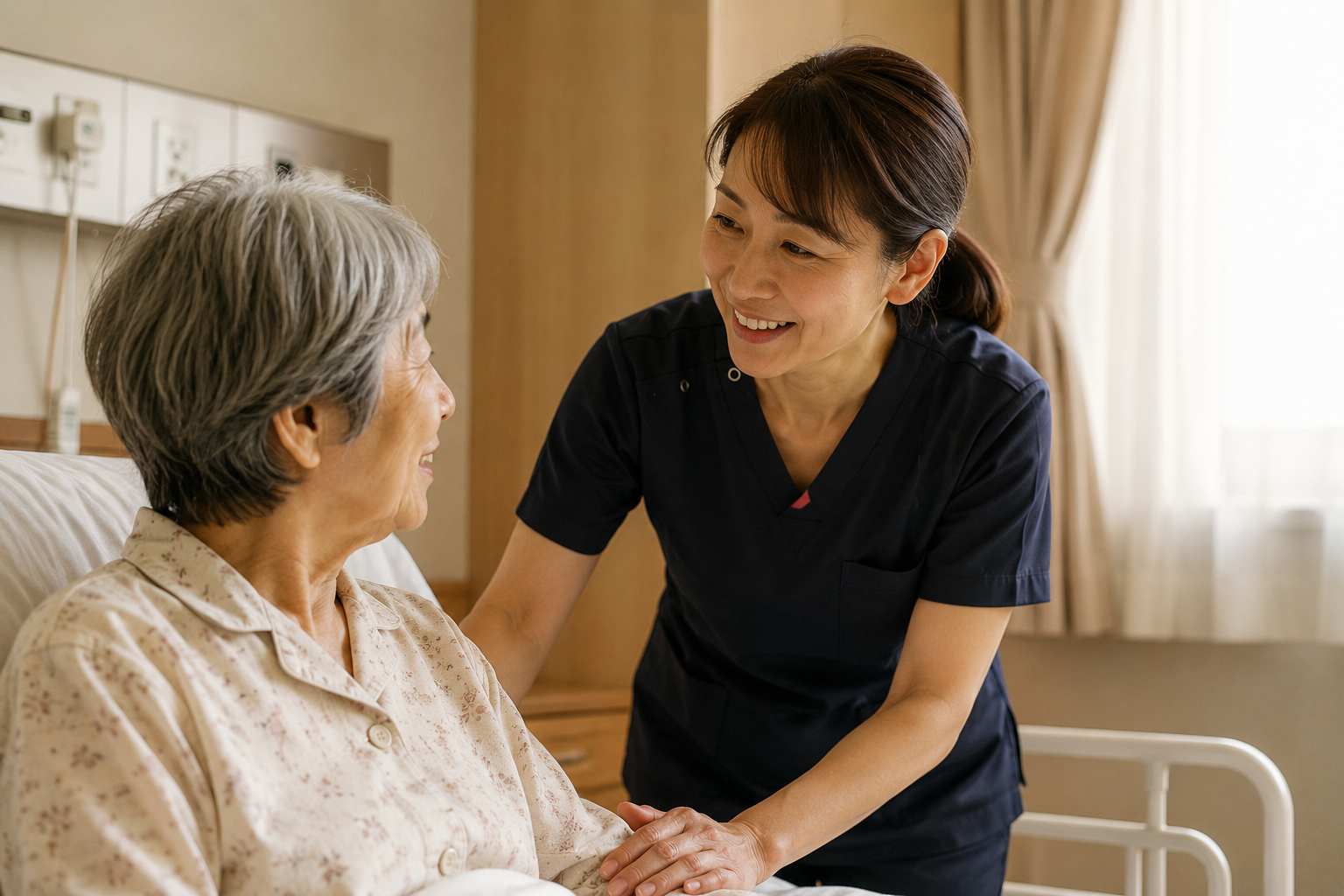
One of the most common questions I receive is about age. Can someone over 40, 50, or even 60 become a caregiver in Japan? Is there an age limit for the SSW visa? I work in a hospital where 80 percent of my colleagues are over 40 — and some are over 70. Here is the honest answer.
Is there a minimum age limit for caregivers in Japan?
Yes. The minimum age to become a caregiver in Japan through the SSW — Specified Skilled Worker — visa is 18 years old. This is the official legal requirement and applies to all applicants regardless of nationality.
Below 18, you cannot apply. Above 18, the door is open — but as with most things in caregiving, the reality is more nuanced than a single number.
Is there a maximum age limit?
Officially — no. There is no upper age limit for becoming a caregiver in Japan. This surprises many people who assume Japan’s strict visa system would have a cutoff. It does not.
At my hospital, we have caregivers who are in their 60s and 70s and still working. One colleague is over 70 and continues to do the job every day. Age alone does not disqualify you from caregiving in Japan — and that is not just policy, it is the reality I see with my own eyes every shift.
In fact, the caregiving workforce in Japan skews significantly older. At my hospital, approximately 80 percent of caregivers are over 40. Many are in their 50s and 60s. Younger caregivers are actually the minority in many facilities — largely because the physical demands and lower wages push younger people toward other industries.
Does age affect your chances of getting hired?
Honestly — yes and no.
Age itself is not the deciding factor. Physical condition and experience are far more important. At my hospital, some caregivers over 50 perform better than I do. That is not false modesty — it is the truth. Experience, technique, and attitude can outweigh the physical advantages of youth in this field.
That said, companies do tend to prefer younger candidates — particularly for new hires. Younger workers are seen as having better long term health prospects and more years of productive work ahead. If you are over 40 and applying for a caregiving position in Japan without prior experience in the field, you may find it more challenging to secure a job offer. It is not impossible — but it requires more effort and stronger qualifications to compensate.
If you are over 40 and already have caregiving experience, your chances improve significantly. Experience speaks louder than age in a field that desperately needs skilled workers.
Does age affect SSW visa approval?
There is no official upper age restriction in the SSW visa rules. Older applicants can and do receive SSW visa approval. At my hospital, we have a Filipino caregiver over 50 who is still working — proof that age is not a visa barrier.
However — and this is important — the visa approval rate does tend to be lower for older candidates compared to younger ones. Employers play a significant role in the visa process, and an employer who prefers younger workers may be less likely to sponsor an older applicant’s visa.
The honest summary: no official age barrier exists, but the practical reality is that older applicants face more competition and employer preference works against them. It is not impossible — but it requires more preparation, stronger language skills, and ideally prior caregiving experience to overcome.
What happens to salary after 65?
In Japan, the standard retirement age is 65. Many companies use this as a benchmark — and for caregivers who continue working past 65, salaries are often reduced compared to what they earned before retirement age.
I have heard this from older colleagues at my hospital. The salary drop is real, though I did not feel comfortable asking for specific figures. What is clear is that continuing to work past 65 in Japan — while possible — comes with a financial trade-off that every older worker should be aware of before committing to this path.
This applies to both Japanese and foreign caregivers equally. Age-based salary adjustments at retirement are a standard part of Japanese work culture — not something specific to foreigners.
What really matters more than age — physical condition
After everything I have observed in two years of caregiving in Japan, here is my honest conclusion: physical condition matters far more than age.
Caregiving is physically demanding work. Lifting and repositioning patients, long shifts, irregular hours — these place real demands on your body. A 55 year old in excellent physical condition will outperform a 25 year old who is unfit or unprepared. I have seen this with my own eyes.
Before worrying about your age — ask yourself honestly about your physical condition. Can your back handle repeated lifting? Can your body sustain long shifts? Are you mentally prepared for the emotional weight of this work alongside the physical demands?
If the answer is yes — age is much less of a barrier than you might think.
My honest advice by age group
If you are in your 20s or 30s: You have the physical advantage and the time to build language skills and experience. The SSW caregiving visa is very accessible for you. Start with your Japanese language study and take the exam when you are ready.
If you are in your 40s: It is still very possible — but be realistic about the physical demands. Focus on building strong Japanese language skills and if possible gain some caregiving experience before applying. Your maturity and life experience are genuine assets in this field.
If you are in your 50s or 60s: Yes — you can still become a caregiver in Japan. It is not impossible and there are people doing it successfully. But I want to be honest with you: the work is physically demanding and the salary is modest. Think carefully about whether your body can sustain this long term. If you are in good health and genuinely want to do this work — go for it. If you are primarily motivated by money, there may be better options available to you.
If I am being completely honest — for anyone over 40, I would encourage you to also explore other types of work in Japan that are less physically demanding. Caregiving is meaningful and important work. But your health is more important than any job. 😊
The most important factors — regardless of age
Whatever your age — if you are serious about becoming a caregiver in Japan, focus on these three things above everything else:
Language. Improve your Japanese as much as possible before applying. N4 is the minimum requirement but the higher your level, the better your chances of getting hired and doing the job well.
Skills and competency. Know what caregiving involves. Study the exam materials seriously. Come prepared — not just willing.
Physical condition. Honestly assess your health. This job will ask things of your body that most jobs do not. Go in knowing that — and prepared for it.
Age is a number. Your condition, your preparation, and your commitment are what will define your experience in Japan. 🇯🇵
Related post: Caregiver in Japan Requirements
How to Become a Caregiver in Japan
“For more context about foreigners living and working in Japan read Why Foreign Workers Have Become Essential to Japan’s Elderly Care System.”
Leave a Reply