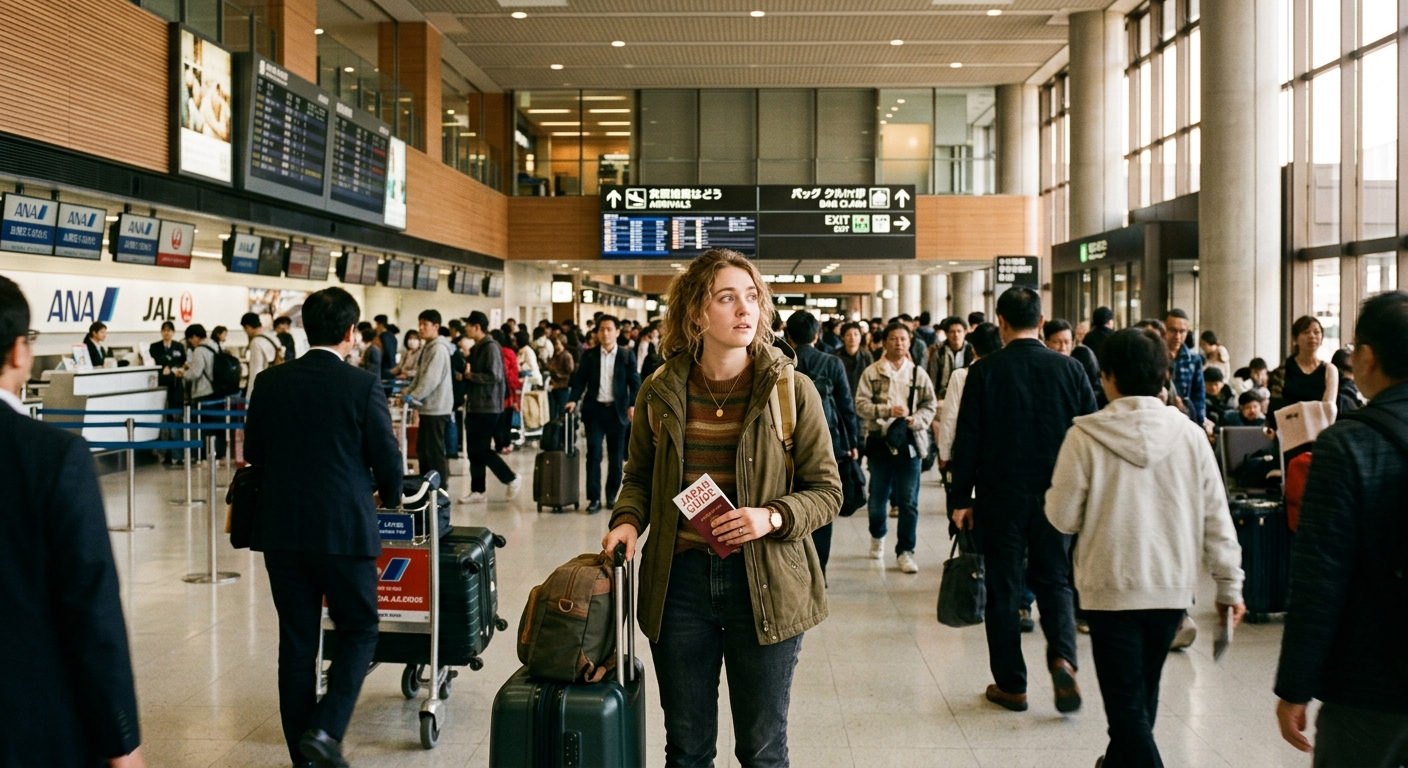
Eight years in Japan. Two years as a caregiver. And still — there are things I wish someone had told me before I arrived. Not the obvious things. The specific, quiet realities that hit you only after you are already here. This post is that list.
1. Japanese work culture is harder than any blog prepares you for
People talk about Japan’s work culture being demanding. What they do not explain clearly enough is the specific way it is demanding for caregivers.
The combination of heavy patient-to-caregiver ratios, low pay relative to the cost of living, and the emotional weight of caring for people who are suffering — or dying — creates a level of stress that is hard to fully understand until you are inside it. Add to this the gap between Japan’s public politeness and its private reality: criticism is almost never given directly. You will not be told openly what you are doing wrong. You will be expected to sense it, adjust, and never ask why.
That gap — between the polite surface and the unspoken truth underneath — is one of the most disorienting things about working in Japan, and it is something almost no guide prepares you for adequately.
2. The junior and senior system will affect your daily life more than you expect
In many countries, hierarchy at work is based primarily on job competence. In Japan, hierarchy is based on age, experience, and — for foreign workers — citizenship. This distinction matters enormously.
New foreign caregivers frequently experience professional friction and personal stress because they do not fully understand this system before they arrive. One of the most common and costly mistakes is questioning a senior colleague’s instructions — even when you genuinely know a more efficient way to do something.
In many Western work cultures, suggesting a better approach is seen as proactive and valuable. In Japan, the same action can be interpreted as insubordination or disrespect toward your senpai. The senior is not just more experienced — they hold a position of cultural authority that is not to be challenged directly, regardless of the quality of their method.
Learn this before you arrive. Not because the system is always right — it is not — but because understanding it is the difference between navigating Japan’s workplace smoothly and creating unnecessary conflict from your very first week.
3. The drinking culture is real — but manageable
Japan has a strong drinking culture, and workplace social events — nomikai — are a genuine part of professional life. For those who do not drink, this is worth understanding before you arrive.
The good news: saying no to alcohol is increasingly accepted. Ordering non-alcoholic options like oolong tea or soda at a nomikai is completely standard practice now. Nobody will force a drink into your hand.
But attending at least once is often recommended — not because of the drinking, but because of what attendance signals to your team. Showing up, even if you leave early or drink only soda, communicates respect and willingness to be part of the group. In Japan’s team-based work culture, that signal matters. Skipping entirely — especially early in your tenure — can create a subtle but real distance between you and your colleagues.
4. Finding housing as a foreigner is genuinely difficult
This is something many people only discover after they have already arrived — which is exactly too late.
Finding an apartment independently as a foreigner in Japan is hard. Japanese landlords frequently do not trust foreign tenants — assumptions about bill payment and behaviour create real barriers. Most rental agreements require a Japanese guarantor, which most new arrivals simply do not have.
Before you come, ask your employer directly about housing support. Many caregiving employers in Japan offer accommodation — either company housing or a housing subsidy. If your employer does not offer this, understand that finding your own place will be significantly more challenging than it would be for a Japanese person in the same situation.
5. The first month will cost more than you think
Japan is expensive — and the first month hits hardest. Setup costs for accommodation, transportation cards, basic household items, phone plans — these add up quickly before your first paycheck arrives.
Bring extra money. Not a little extra — a meaningful financial cushion that can cover at least one to two months of living expenses before your salary starts flowing regularly. Arriving without this buffer creates immediate financial stress on top of an already demanding adjustment period.
6. The language challenge is deeper than you expect
Everyone knows Japanese is difficult. What people do not warn you about specifically enough for caregiving work are two layers that go beyond everyday language.
The first is Kanji — particularly medical Kanji. Writing incident reports, reading patient charts, communicating formally in writing — these require a level of Kanji ability that standard language study does not emphasise. You can speak reasonably well and still struggle significantly with the written demands of caregiving work.
The second is Keigo — formal or polite Japanese. In caregiving, you are expected to speak to patients, seniors, and nurses with the appropriate level of formality at all times. Keigo is a different register of the language — not just vocabulary, but tone, structure, and cultural expectation woven together. Most language courses barely touch it.
My honest recommendation: aim for a high N3 level before arriving — not the official N4 minimum requirement, but genuinely strong N3. And when you study, prioritise vocabulary above grammar. Even imperfect grammar with strong vocabulary will take you much further in daily caregiving life than perfect grammar with limited words.
7. Learn to “read the air” — Kuuki wo Yomu
If there is one concept that, once understood, unlocks Japan more than any other — it is this: kuuki wo yomu (空気を読む), which literally means “reading the air.”
Kuuki wo yomu is the ability to sense unspoken group feelings, anticipate needs, and adjust your behaviour without being explicitly told to. It is a fundamental social skill in Japan — and in a caregiving environment, where team communication is often indirect and hierarchy is real, it becomes essential for daily survival.
When your senior is unhappy with something you did, they will likely not tell you directly. When the team needs help, it may not be requested out loud. When a decision has already been made informally before a meeting, the meeting is often just a formality. Reading these unspoken signals — and responding appropriately — is what separates foreigners who struggle in Japan’s workplaces from those who find their footing.
You cannot fully learn kuuki wo yomu before you arrive. But knowing the concept exists — and actively watching for it from your first day — will save you significant confusion and frustration.
What nobody warns you about that is actually wonderful
This post has been honest about the difficulties. But there is one thing nobody warns you about that is genuinely positive — and I want to end here.
In Japan, caring for the elderly is not just a job. It is a socially vital role rooted in deep cultural values around filial piety and respect for age. The elderly are genuinely honoured here in a way that is not universal across all cultures. When you care for Japanese elderly patients, you are participating in something that the society around you genuinely values — even if the salary does not always reflect it.
That sense of social purpose — quiet, unspoken, but real — is something I did not expect to feel as strongly as I do. Prepare yourself mentally for the cultural weight of this work. It is heavier than most jobs. But it carries a meaning that most jobs do not. 🇯🇵
RELATED POST: 8 Years in Japan — What I Wish I Knew
Caregiver in Japan Requirements
“For more context about foreign caregivers in Japan read Why Foreign Workers Have Become Essential to Japan’s Elderly Care System.”
Leave a Reply