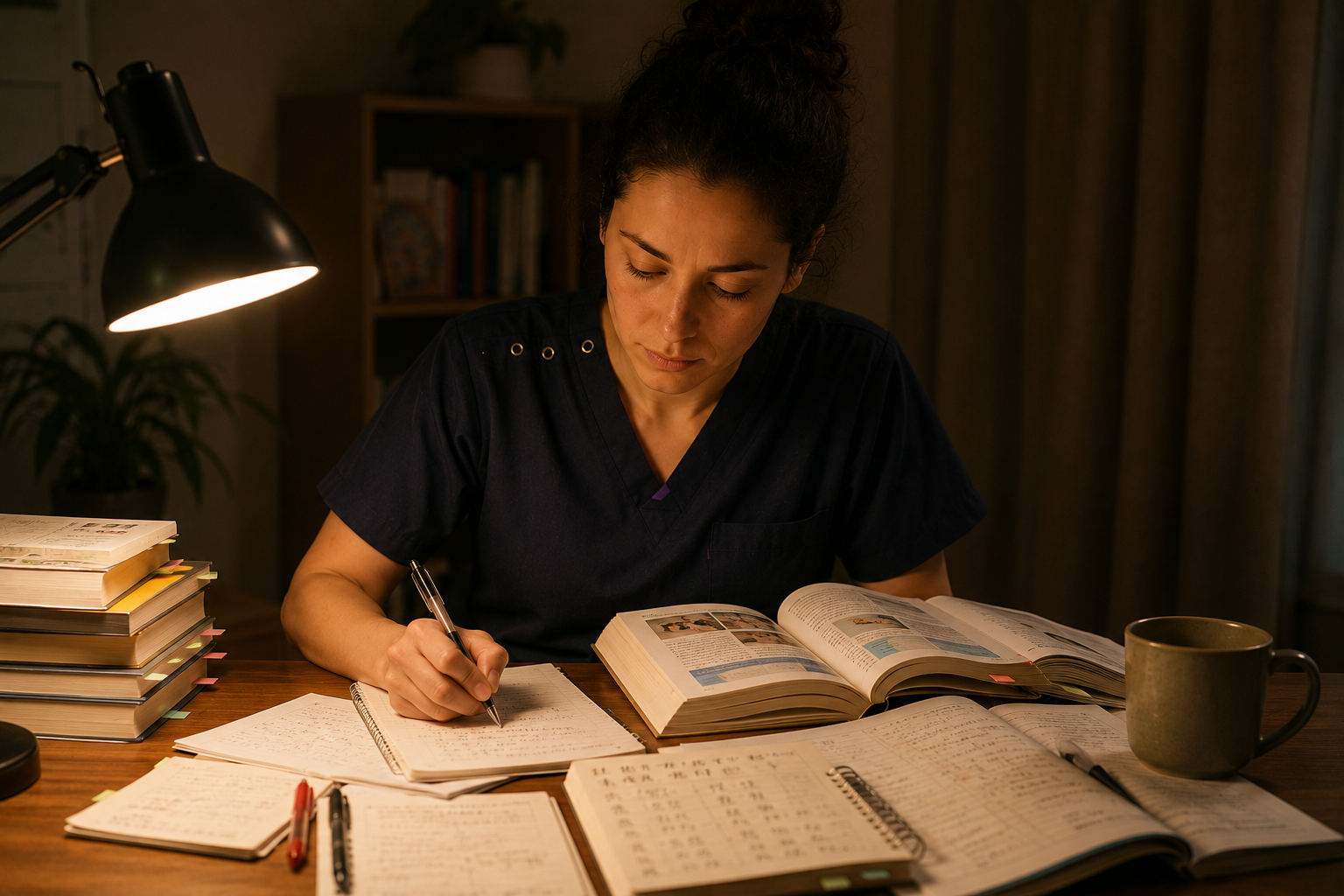
I gave myself one month to pass an exam in a field I knew nothing about, in a language full of medical kanji I had never studied. I was nervous the entire time. Walking out of the exam room, I was not confident I had passed. But I did. This is exactly how I did it — and what I would do differently now.
First — what is the SSW caregiving exam actually like?
Before getting into study methods, let me give you a clear picture of what you are preparing for.
The Long-term Care Specified Skilled Worker Evaluation Test is administered via Computer-Based Testing (CBT). The exam consists of 45 questions with a 60-minute time limit. There is also a separate Japanese Language Evaluation Test — 15 questions, 30 minutes — but if you have already passed JLPT N3 or above, you are exempt from this portion. I did not have to take the language test because I had already passed N3.
The exam covers topics including the mechanism of mind and body, skills for providing daily assistance, and the basics of nursing care. Of these, the first two were the hardest for me — primarily because of the medical kanji involved. The basics of nursing care felt more manageable.
One thing that genuinely surprised me on exam day: the volume of kanji. Even though I knew it would be difficult, seeing it in the actual exam questions was a different experience from studying at home. Prepare for that moment specifically.
My honest timeline — one month, and I was lucky
I want to be completely clear about something before sharing my study method: one month is not enough time to prepare properly. I passed in one month — but I was lucky. My science background from high school gave me a foundation in biology that most people studying for this exam do not have. Without that, one month would have been genuinely insufficient.
If you have enough time — use it. Give yourself two to three months minimum, especially if caregiving concepts are new to you and your kanji ability is not strong. Do not rush this exam. The material is genuinely difficult, and pressure makes the kanji harder, not easier.
My study method — exactly what I did
My study materials were simple: a PDF file of exam preparation materials found online, and YouTube videos for visual practice of caregiving techniques.
I studied four to five hours every day. On holidays, I studied more than four hours because I was committed. I made notes throughout — not just reading, but writing things down actively. Writing forces you to process information differently than reading alone.
For the visual side of caregiving — how to lift patients, how to position people safely, how to perform mouth care — YouTube was invaluable. Watching the techniques being performed helped me understand and remember them far better than reading descriptions alone.
How I tackled the kanji — a method I discovered on my own
This is the part of exam preparation that most guides skip over — and it is the part that actually determines whether you pass or fail for many foreign candidates.
Medical kanji is hard. Even for native Japanese speakers, medical terminology is challenging. For foreigners, it is a genuine obstacle that requires a specific approach.
My method was this: when I encountered a difficult kanji character, I did not try to memorise the whole thing at once. Instead, I broke it down into its smaller component parts, memorised each part separately, and then connected them together to form the complete character and its meaning. It is hard to explain in writing — but the principle is to build kanji understanding from its parts rather than trying to swallow each character whole.
I also visualised the kanji in my mind every single day. And I used medical terms in my daily thinking — even when they did not naturally fit — just to keep them active in my memory. This technique of forcing unfamiliar vocabulary into regular mental use is something I had done when learning Japanese generally, and it works for medical terminology too.
What I would do differently if I were starting today
If I had enough time, I would not rush. I would prepare slowly while systematically learning basic medical kanji from the beginning — not cramming it all into the final stretch.
Specifically, I would add one resource that I wish I had used: an elementary school kanji book. This sounds too simple, but it works. Elementary school kanji textbooks build the foundation characters that medical kanji is constructed from. Reinforcing those basics makes the more complex medical characters significantly easier to learn and remember.
Write kanji every day. Not just read it — write it, by hand, repeatedly. The physical act of writing reinforces memory in a way that reading on a screen does not.
The most important thing — and it is not a study tip
People ask me about study materials and hours and techniques. All of that matters. But the single most important factor in passing this exam is something that cannot be downloaded or purchased.
Discipline.
I studied four to five hours every day. Not most days — every day. On holidays, more. That consistency, maintained even when I was tired or uncertain about whether I would pass, is what made the difference. Not luck. Not a science background. Discipline.
If you are reading this feeling overwhelmed by the exam — do not focus on whether you will pass. Do not calculate your odds or compare yourself to others. Just focus on doing your best and practicing hard, every single day, until the exam day arrives.
The exam is difficult. The kanji is hard. One month is probably not enough. But if you are disciplined — truly disciplined — you will give yourself the best possible chance. That is all any of us can do. 🇯🇵
RELATED POST: How to Become a Caregiver in Japan
Caregiver in Japan Requirements
How the SSW Visa Saved My Life
“For more context about foreign caregivers in Japan read Why Foreign Workers Have Become Essential to Japan’s Elderly Care System.”
Leave a Reply