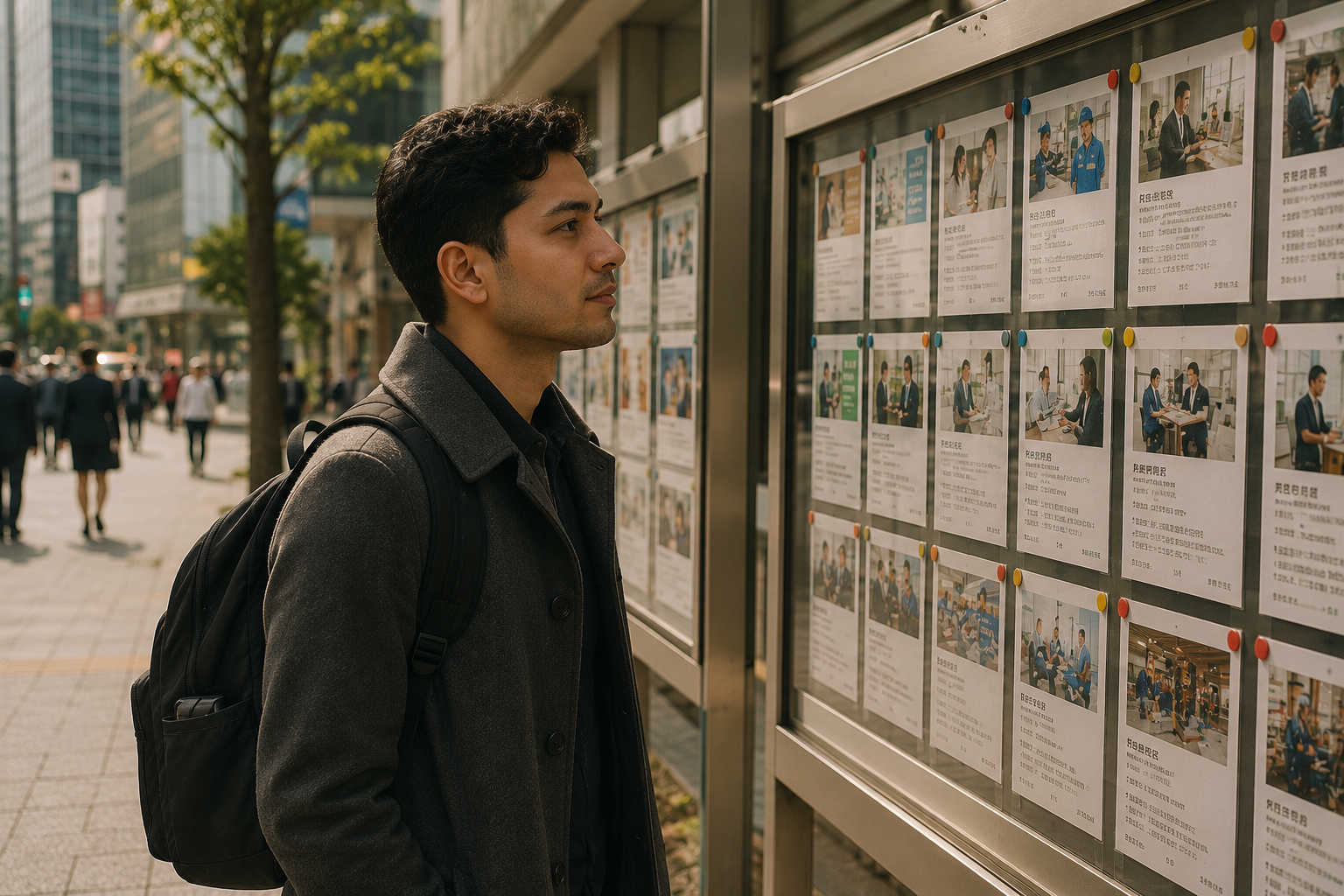
Many people dream of working in Japan without a university degree. Some paths exist — but they are narrower than most blogs suggest. After 8 years living and working in Japan, here is the honest picture.
The hard truth nobody tells you first
Let me be direct before anything else: without a university degree, obtaining a work visa for Japan is extremely difficult. Japan’s immigration authorities have strict legal requirements — and a company wanting to hire you does not automatically mean the government will approve your visa.
This is one of the biggest misconceptions people have. Many assume that if a Japanese company interviews them, likes them, and offers a job, the hard part is over. It is not. The employer’s interest and the government’s visa approval are two completely separate things. Japan’s immigration system requires either a bachelor’s degree or a specific legal alternative — and that requirement does not bend because a company wants you.
Personally — if I did not have a degree, coming to Japan would not even cross my mind. I know from eight years of living here how difficult it is without both skills and qualifications. That is my honest starting point, and I think you deserve to hear it before reading further.
The main legal pathway — the SSW visa
The most realistic and accessible legal pathway to working in Japan without a degree is the Specified Skilled Worker (SSW) visa. This visa was created specifically to address severe labour shortages across Japan’s key industries — and it does not require a university degree.
What it requires instead:
Japanese language: Passing the JLPT N4 level or the equivalent JFT-Basic A2 test. Skills exam: Passing the official SSW skills evaluation for your chosen field. Education baseline: A high school diploma is required to enter Japan on most visa types — without this, immigration will not grant you a visa regardless of skills or job offers, but SSW does not require any degree.
Both exams can be taken inside Japan or at test centres across Southeast Asia — making this pathway accessible to people applying from their home countries.
The 16+ SSW job categories — what is actually available
Japan’s SSW program now covers more than 16 industrial sectors. Here is an honest overview of what is available:
Building Cleaning, Industrial Product Manufacturing, Construction, Shipbuilding, Automobile Repair and Maintenance, Aviation, Accommodation, Automobile Transportation, Railway, Agriculture, Fishery and Aquaculture, Food and Beverage Manufacturing, Food Service, Forestry, Wood Industry — and Caregiving, which remains one of the most accessible entry points with monthly exam schedules.
None of these roles require a university degree. Eligibility is based entirely on language and skills exam results.
Which SSW fields are most popular — and which are harder than they look
Outside of caregiving, the most popular SSW sectors among foreign workers are Food and Beverage Manufacturing, Food Service, Agriculture, and Building Cleaning. Here is an honest look at each:
Food and Beverage Manufacturing — shift-based, consistent pay, and lower pressure on immediate high-level Japanese conversation since work revolves around defined processing protocols. Good for people who prefer structured routine and physical task-focused work.
Food Service (Restaurants) — high volume of positions available in major cities. However, the speed and real-time pressure of restaurant work, combined with Japan’s senior culture, makes this more demanding than it appears. Be prepared for a fast pace and strict hierarchy.
Agriculture — draws many workers for its outdoor environment and seasonal overtime opportunities. But the physical and environmental toll is significant — and agriculture is often located in rural areas, which can mean genuine isolation far from city life and foreign communities.
Building Cleaning — consistently high demand in Tokyo and Osaka, routine independent work. A stable and underrated option for those who prefer working without heavy customer interaction.
Accommodation (Hotels) — looks appealing on paper, especially with Japan’s booming tourism sector. But this is one of the most deceptively difficult SSW fields for language reasons. N4 Japanese covers basic greetings — but hotel work requires high-level formal Japanese called Keigo, plus rapid, polite handling of guest complaints. This gap between what N4 allows and what the job actually demands is significant.
Construction — demanding physically and culturally. Japan’s summer heat can reach 40 degrees, and construction sites operate under a strict seniority culture that can be very stressful for foreign workers unfamiliar with Japanese hierarchy.
The honest truth across all fields: no matter which sector you choose, if your Japanese is low, surviving in Japan’s workplace is very hard. The senior culture adds pressure on top of the language barrier. These two things together are what most foreign workers struggle with most — not the technical skills themselves.
Other pathways — for specific situations
Working Holiday Visa — if you are a citizen of a participating country (UK, Australia, Canada, New Zealand, Ireland, France, South Korea, and others) and under 30 (or 35 for some countries), this visa gives you 1 to 2 years of full work rights without needing a degree or corporate sponsorship. It is one of the most flexible options available — but it is limited by age and nationality.
English teaching — with conditions — formal English teaching positions in Japan typically require a bachelor’s degree. However, if you are already in Japan on a visa that permits work (spouse visa, permanent residency, long-term resident, working holiday, or student with a part-time permit) and have native or fluent English ability, private English cafes, small Eikaiwa schools, and tutoring platforms will often hire based on personality and language ability alone.
Student visa with part-time work — coming to Japan as a student allows up to 28 hours of part-time work per week. This gives you income while building your Japanese skills and credentials for future full-time work.
My honest recommendation
If you want to work in Japan without a degree — the SSW visa is your most realistic legal pathway. But do not underestimate what it requires.
Before applying, invest seriously in your Japanese. N4 is the minimum requirement — but the higher your level, the better your chances of getting hired, doing the job well, and actually enjoying your time in Japan rather than just surviving it.
Beyond language — gain relevant skills and experience in your chosen field before applying. Five years of experience is good. Ten years is better. Japan’s visa system rewards demonstrated competence, not just ambition.
And choose your field honestly — not based on what sounds good, but based on what genuinely suits your personality, your physical condition, and your language level.
One final warning
If anyone approaches you offering a work visa for Japan in exchange for a fee — walk away immediately. This is a scam. Japan’s legitimate visa system does not work that way. No amount of money paid to a third party changes what Japan’s immigration law requires. Protect yourself and your savings by understanding this clearly before you begin your search.
The path exists. But it requires real preparation, real language skills, and real honesty about what you are walking into. 🇯🇵
Related posts
→ Want to know how the SSW visa actually works? Read How the SSW Visa Saved My Life in Japan.
→ Considering caregiving specifically? Read I Became a Caregiver in Japan With No Experience — Here’s Exactly How.
→ Want to know what Japan work culture is really like? Read What Nobody Tells You Before Coming to Japan as a Caregiver.
“For more context about foreigners living and working in Japan read Why Foreign Workers Have Become Essential to Japan’s Elderly Care System.”
Leave a Reply