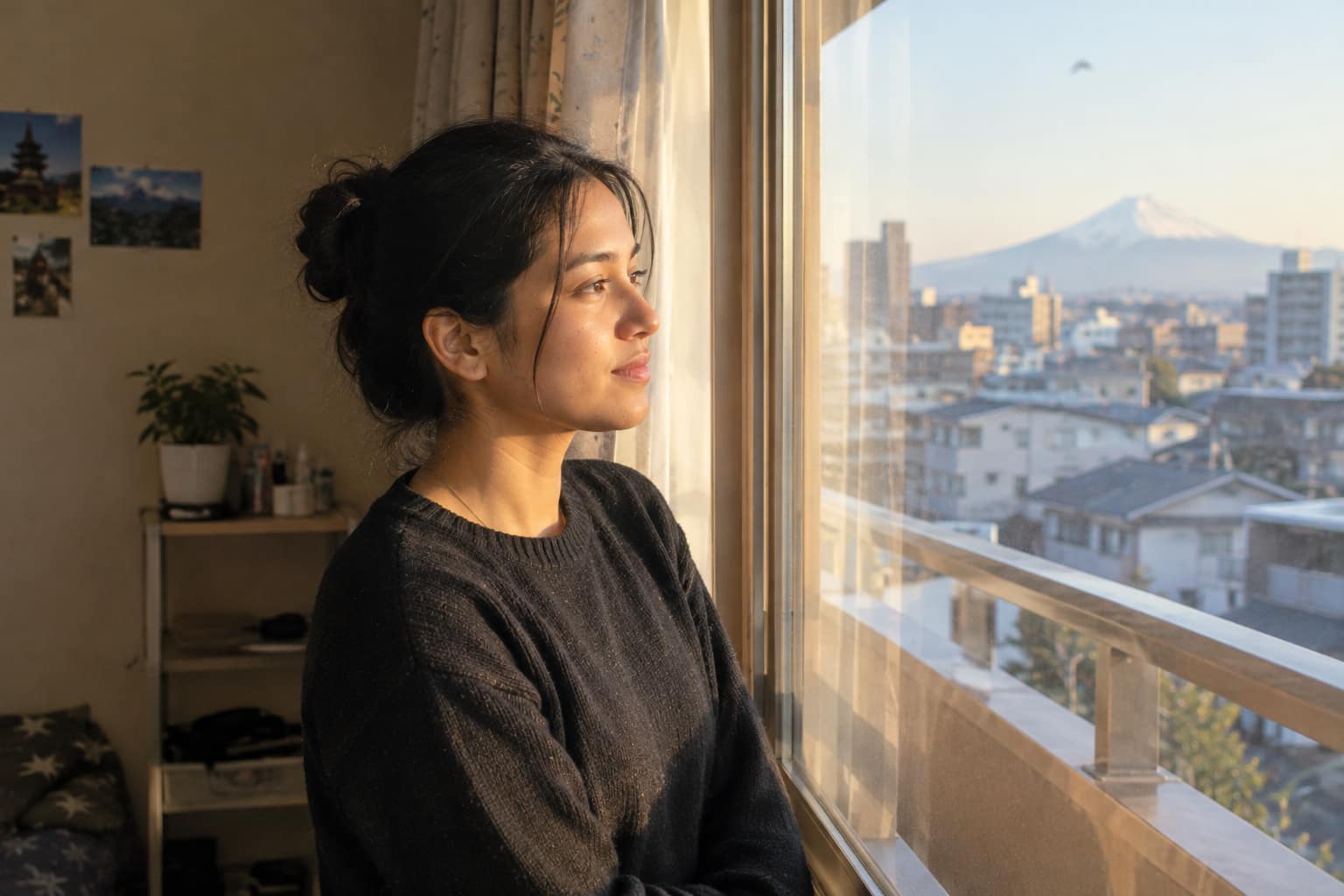
Eight years is a long time. Long enough to watch yourself change in ways you never expected. Long enough to make mistakes you still think about. And long enough to finally understand what nobody could have told you when you first arrived — because some things you can only learn by living them.
I arrived in Japan in 2018. I was young, optimistic, and full of ideas about what my life here would look like. Some of those ideas were right. Most of them were not.
Eight years later, I am still here. I have a stable career, a team leader role, and a life I have built piece by piece in a country that was never easy on me. And when I look back at the person who stepped off that plane at Narita, there is so much I want to tell them.
This is that letter.
Learn the language — not just enough, but properly
If there is one regret I carry from my early years in Japan, it is this: I did not take Japanese seriously enough from the beginning.
I have a good level of proficiency now. I can work, communicate, and navigate daily life without much difficulty. But eight years is a long time. If I had pushed harder from day one — studied every spare hour, taken every opportunity to speak — I could be near-native level today. That window does not come back.
Language is not just a communication tool in Japan. It is the key to everything. The better your Japanese, the better the companies you can enter, the higher the salary you can command, the more respect you receive in the workplace. Two people with identical skills but different language levels will have completely different lives in Japan. I have seen this play out in front of me many times.
If you are planning to come to Japan, or if you are already here and still treating Japanese as something to get around rather than something to master — please change that now. Not tomorrow. Now.
Choose your school wisely
The second thing I wish I had done differently is choose my college more carefully.
In Japan, the school you attend matters more than most foreigners realise before they arrive. A good school connects you to good companies, gives you structured support, and opens doors that are much harder to open on your own. If your language is strong and your school has the right connections, you can enter companies with decent salaries and real career paths. That foundation changes everything that comes after.
Many people choose a school based on cost, convenience, or because a consultancy recommended it without really explaining the difference. I understand that — I was in that position too. But if I could go back, I would spend more time researching schools, asking harder questions, and choosing the one that would give me the best platform for the future.
Japan is not what it looks like from the outside
Before I came to Japan, I believed what I saw online. Foreigners praising the politeness, the cleanliness, the safety. And those things are real. Japan is genuinely impressive in many ways.
But once you live here — once you learn the language and start to understand the culture — you see the other side.
Japanese society can be harsh. The work culture is demanding in ways that are difficult to describe to someone who has not experienced it. And while Japanese people appear polite, not all of them are genuinely kind. Criticism rarely comes directly. It comes quietly, behind your back, wrapped in smiles. A colleague who says nothing to your face may say everything to someone else.
There is a concept in Japanese culture called tatemae (建前) and honne (本音). Tatemae is the public face — what you show the world. Honne is the true feeling underneath. Every Japanese person carries both, and learning to read the difference between them is one of the most important skills you can develop here.
Even something as simple as a compliment can mean the opposite. When someone tells you your Japanese is good, it does not always mean your Japanese is good. Sometimes it means: you need to keep improving. This sounds strange to foreigners. But in Japan, maintaining harmony often matters more than speaking a direct truth. Once you understand this, a lot of confusing moments suddenly make sense.
Punctuality changed me
One of the smallest things that has made the biggest difference in my daily life is punctuality.
Japan runs on time. Trains, meetings, shifts, meals — everything operates on a schedule, and being late is not just inconvenient, it is disrespectful. After eight years here, this has become part of who I am. I feel genuinely irritated when colleagues or friends arrive late. I have scolded Nepali friends for it more than once.
I have also become much better at reading the air — 空気を読む, kuki o yomu. It means observing the mood of a room before you speak. Understanding what is expected without being told. I was always a careful person, but Japan made me sharper. More aware. More patient before opening my mouth.
These are not just Japanese habits. They are good habits anywhere in the world.
Money looks different when you earn it yourself
Growing up in Nepal, I received money from my parents. I did not think much about where it came from or how hard it was to earn. I spent it without much thought.
That changed the moment I started working in Japan.
When you earn every yen yourself — when you know exactly how many hours of hard physical work went into each payslip — you start thinking differently about money. I calculate my expenses now. I ask myself before every purchase: do I actually need this? If the answer is yes, I buy it. If the answer is no, I put it back. I have stopped buying things I do not use.
I also wish I had understood earlier how important it is to send money home consistently and to save a portion every month without exception. Not just remittances — but personal savings. A financial buffer that no emergency can take away. That mindset took me too long to develop.
One piece of advice for Day One
If I could go back and whisper one thing to myself stepping off the plane at Narita in 2018, it would be this:
Prioritise language and skill. Learn how to use the internet properly — not just for entertainment, but to find opportunities, earn money, and grow beyond one job. Make time for your family and visit your home country every one or two years. Life is not always going to go according to plan, even when you have done everything right. Do not let that discourage you. Just do your best, and you will get through it.
And one more thing: do not try to solve everything at once. Life is full of things you cannot control or predict. Take it slowly. Build one thing at a time. The people who last in Japan — who truly build a life here — are not the ones who sprinted. They are the ones who kept going.
Want to know what the first year in Japan actually looks like? Read My First Year in Japan as a Foreigner — What I Learned.
Still deciding if Japan is right for you? Read Is Caregiving in Japan Worth It? My Honest Answer After 8 Years.
Struggling with Japanese work culture? Read Japan Work Culture Shock — What Foreign Caregivers Never Expect.
For more on how Japan’s care sector works from the outside: Foreign Elderly Care Workers in Japan — Unseen Japan
Leave a Reply