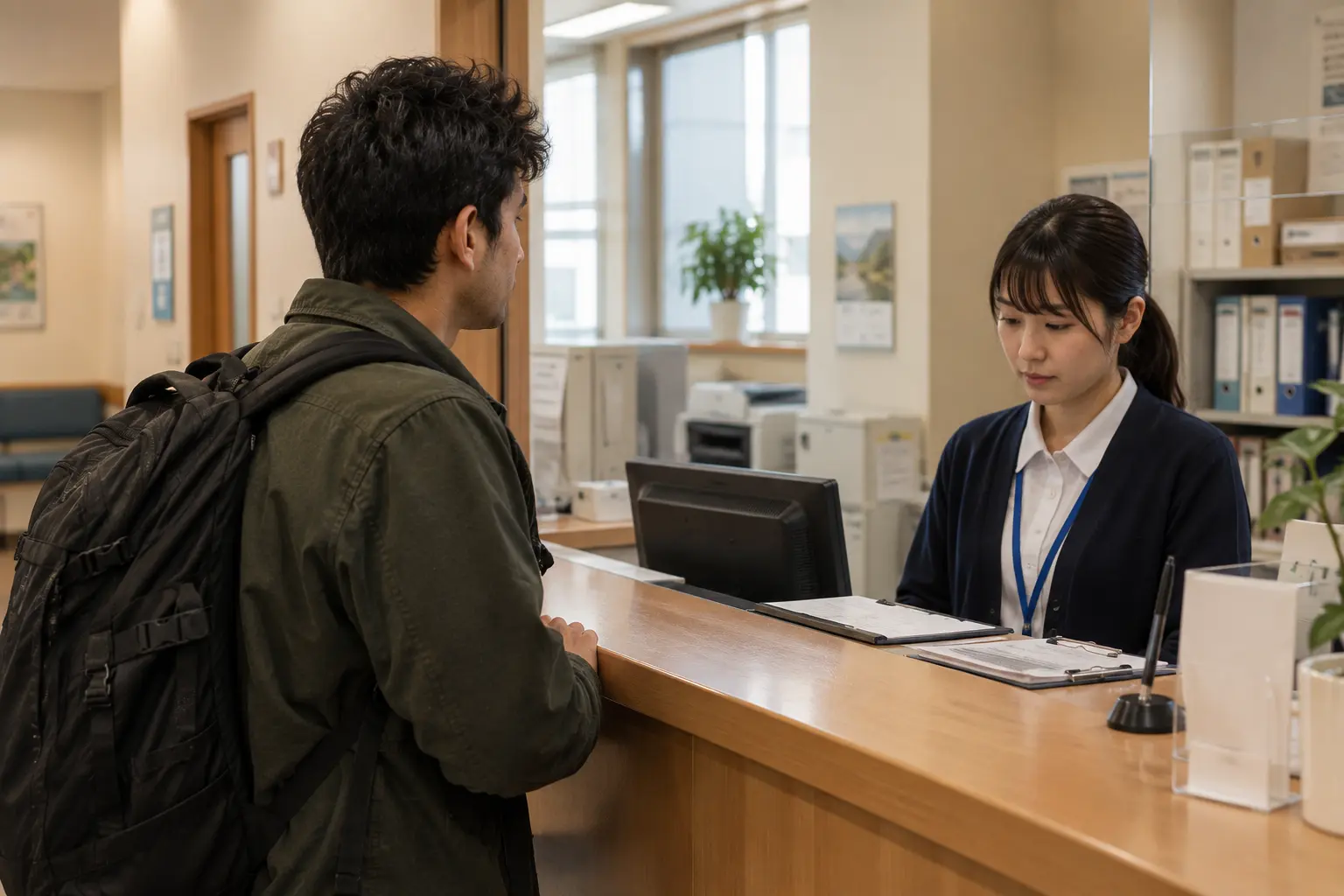
Japan has a reputation for being the most polite country in the world. Today I went to a clinic, a pharmacy, and a barber. The pharmacy was wonderful. The clinic and the barber were not. After eight years of living here, I want to say something honest about what Japanese politeness actually looks like — and what is changing.
What happened today
The clinic receptionist used formal language — technically correct, no obvious breach of rules. But her tone was cold and off-putting in a way that felt deliberate. When I watched her speak to Japanese patients, the tone shifted completely. Soft, warm, patient.
The barber was similar. When customers did not immediately understand something, the staff seemed reluctant to explain. Not rude in an obvious way — but not what you would call welcoming either.
The pharmacy, by contrast, was genuinely friendly and professional toward everyone. No distinction, no shift in warmth depending on who was standing at the counter.
I want to be fair: I am not certain whether what I experienced at the clinic and the barber was intentional rudeness toward a foreigner, or simply people who were tired and not performing well at their jobs. But I noticed the difference in how they treated Japanese customers — and that difference was real.
Is Japan polite? The honest answer
Yes — often genuinely so. Japan’s reputation for service quality exists for real reasons. I have experienced extraordinary kindness and professionalism here across eight years. The pharmacy today was one example among many.
But the reputation is not universal, and it has never been. What is changing is that the gap between how foreigners and Japanese people are treated in everyday service situations seems to be widening. Eight years ago, rudeness toward foreigners happened. It happens more noticeably now.
The data supports this. A nationally representative survey of 1,500 Japanese adults in February 2026 found that nearly two thirds of respondents support tighter regulations on foreign land purchases and expect that foreigners follow Japanese rules and customs. Sixty-eight percent said an increase in foreign residents worsens public security. These are not fringe opinions. They represent a broad shift in how a significant portion of Japanese society views the people living alongside them.
Decades of accepting foreign workers without developing a coherent national integration framework have left a vacuum increasingly filled by social media, misinformation and the conflation of disparate issues into a single “foreigner problem.”
There is a difference between politeness and warmth. Japanese people are often polite. They are not always nice. And for foreigners, that gap is becoming more visible.
What social media is doing to this
SNS is a significant part of why things feel different now. Many Japanese people encounter content about foreigners — crime stories, complaints, generalisations — and begin to see all foreigners through that lens. The receptionist who was cold to me today may have never had a bad experience with a foreign patient. But she may have seen a hundred videos suggesting she should be cautious.
What makes this worse: some anti-foreigner content on social media has been produced by paid creators and may be fictitious, created by artificial intelligence. The fear driving some of this behaviour is being manufactured, not experienced.
Social media does not reflect reality — it reflects what gets clicks. Outrage about foreigners gets clicks. A photo of a mixed crowd behaving normally does not.
A small but telling example: I have seen Japanese Facebook pages and TikTok accounts post photos of crowds buying Pokémon products, captioned with comments blaming foreigners for the chaos and lack of civic sense. But looking at the photos, Japanese people are clearly in those same lines. And in the comments, many Japanese users are actually defending the foreigners — pointing out that Japanese people are doing the same thing and calling the posts out for being hateful.
That tells you two things. First, the narrative being pushed on social media does not always reflect what people actually see with their own eyes. Second, not all Japanese people accept it — many push back. The problem is not Japan as a whole. It is a specific current of opinion being amplified by people who benefit from the anger.
I recently found a TikTok channel where Japanese groups walk through streets singing and dancing loudly. The comments are full of people enjoying it. Nobody calls it a lack of civic sense. I am not saying they shouldn’t — this is their country and they can enjoy it. What I am saying is that the same behaviour from a foreigner would be front-page news and the comments would look very different. That double standard is what I find difficult to accept.
Platforms reward anger. A hateful post about foreigners spreads. The comments correcting it do not.
And meanwhile, only about 12,000 foreigners were arrested in Japan last year, despite alarmists’ claims that there would be a crimewave. The data does not support the fear. But the fear exists, and it shapes how some people in service roles behave toward foreign customers.
Rules exist for a reason. Without them, society breaks down — and that applies to everyone equally, Japanese or foreign. If someone breaks the rules, they should face consequences. But the rules should apply to everyone in the same room, not just the foreigners in it.
The double standard I see every day
People complain about foreigners talking loudly on trains. I frequently see Japanese people doing the same — often louder. Some Japanese people sleep on the train floor without consequence. A foreigner doing the same would be treated like a criminal.
Today at the hospital, a Japanese woman received a phone call with a loud ringtone and spoke on it without hesitation. If a foreigner had done the same, the reaction would have been very different — and probably would have ended up on social media as an example of foreigners lacking respect.
People claim foreigners ignore traffic laws. I observe Japanese people breaking those same rules every day.
I am not saying this to paint Japan negatively or to excuse any foreigner who genuinely misbehaves. I am saying it because the standard being applied is uneven — and it is worth saying clearly.
The economic contradiction nobody addresses
Here is something that frustrates me, and I think it should be said plainly.
Some Japanese people say foreigners are taking their jobs or suppressing wage growth. Japan will need three times more foreign workers than it currently has — around 6.7 million people — to sustain its economy given its aging and shrinking population. The government knows this. That is why it issues SSW visas. That is why it expanded the caregiving sector to foreign workers.
Foreigners did not invite themselves. The government issued the visas. The responsibility for managing that process — for helping Japanese society understand why foreign workers are here and what they contribute — belongs to policy and government, not to the people who came legally and follow the rules.
Blaming individual foreign workers for a policy the government designed is not logical. But it is happening.
What I want to say to Japan
I am not trying to defend every foreigner unconditionally. If a foreigner breaks the law, they should face consequences — the same consequences a Japanese person would face for the same act.
But if someone is working legally in Japan, paying taxes, following the rules, and contributing to a society that openly says it needs them — they deserve to be treated with basic dignity. Not special treatment. Basic dignity.
Not every foreigner is bad. Not every Japanese person is good. That should not need saying, but it apparently does.
Japanese society is conservative and, in many ways, still learning how to absorb a rapid increase in foreign residents. When people do not know how to react to something unfamiliar, they sometimes become anxious or defensive. I understand that as a human response. It does not excuse rude behaviour in a service role — a job you are paid to perform professionally regardless of who is standing in front of you — but I understand where some of it comes from.
What I want to say to foreigners who experience this
Learn the language. I say this in almost every post and I say it again here, because it is the most effective response available to you.
Language lets you engage in conversations rather than absorb treatment silently. It lets you respond to someone who has a negative view of foreigners with a calm, well-reasoned reply in their own language. It changes how people see you before they have decided who you are.
Follow the rules. Behave well — not to prove something to people who have already decided what they think, but because it is the right way to live anywhere, and because it protects your ability to stay.
And when you encounter rudeness that feels unjustified, remember that you are one person and the person in front of you is also one person. Neither of you represents everyone from your country. Treating each other as individuals is what both sides of this conversation need to do more of.
I have been in Japan for eight years. I have experienced real warmth and real coldness here. The warmth is genuine. So is the coldness. The honest answer to “is Japan polite” is: sometimes, to some people, more than others — and that gap is getting wider. 🇯🇵
→ Want to know what Japanese work culture is really like from the inside? Read Japan Work Culture Shock — What Every Foreign Worker Needs to Know.
→ Curious about what Japan’s aging society looks like from a caregiving ward? Read Japan Aging Society — What I See Every Day as a Caregiver.
→ Want to know why I have stayed in Japan despite all of this? Read Why I Stay in Japan — The Honest Answer After 8 Years.
For more context about foreigners living and working in Japan read Why Foreign Workers Have Become Essential to Japan’s Elderly Care System.
Leave a Reply